
Image via Pexels
Author: Emily Graham
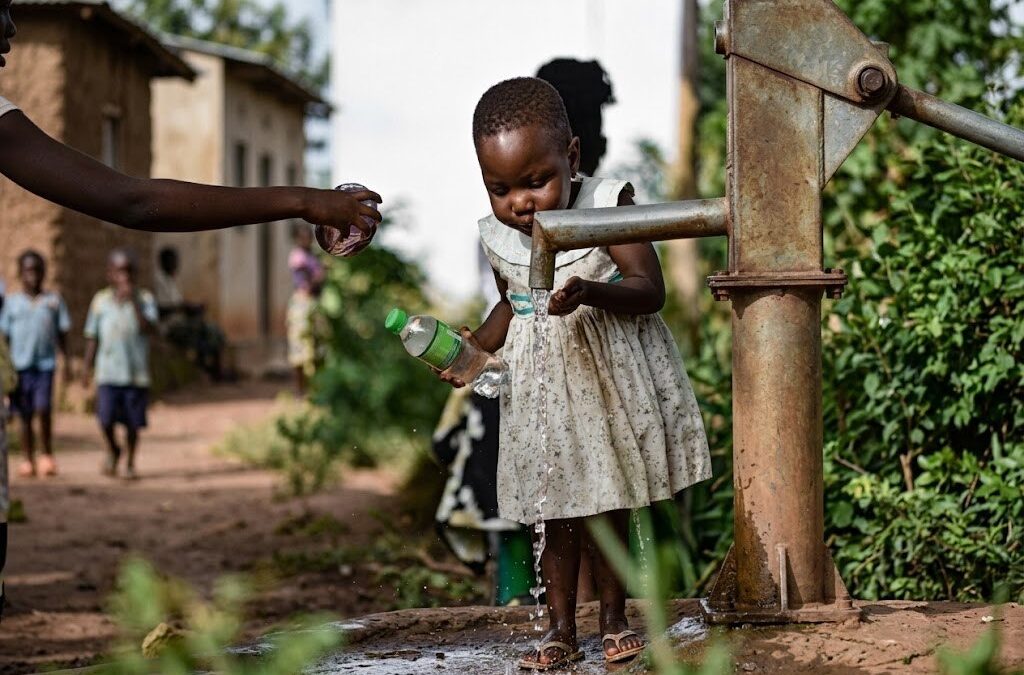
Access to clean water is not just a humanitarian issue. It is a legal one. In communities across sub-Saharan Africa and beyond, women and girls spend hours every day collecting water that is often unsafe to drink, missing school, missing work, and missing the future that clean water access would make possible. Behind that daily reality is a complex web of governance failures, underfunded infrastructure, weak enforcement of existing rights, and international frameworks that have not translated into action on the ground. Changing that reality requires more than goodwill. It requires people with legal training who understand how to hold systems accountable.
Why law is one of the most powerful tools for water justice
The right to safe drinking water was recognized by the United Nations as a fundamental human right in 2010. That recognition matters, but rights without enforcement are aspirational rather than operational. The gap between a declared right and a child drinking clean water in a rural village is filled, or not, by people who understand legal systems well enough to navigate them, challenge them, and build the structures that make rights real.
Legal advocates working in the water access space operate across several domains. Some work directly on environmental and water law, challenging governments and corporations that pollute water sources or fail to provide infrastructure to underserved communities. Others work in international human rights law, using treaty frameworks and international tribunals to apply pressure on states that are failing their obligations. Still others work in nonprofit legal structures, helping grassroots organizations like JB Dondolo navigate the legal requirements that allow them to operate, access funding, and build the partnerships that expand their reach.
None of this work gets done without people who have the legal knowledge and credentials to do it. And right now, there are not enough of them.
The practice areas that connect law and water access
For law students and pre-law students drawn to this kind of work, several areas of legal practice connect directly to water justice and clean water advocacy:
- Environmental law: challenging pollution, protecting water sources, and holding industrial actors and governments legally accountable for environmental harm, one of the most direct legal tools available to advocates working on water quality and access
- International human rights law: using treaty frameworks, UN mechanisms, and international legal bodies to advance the right to water as a binding legal obligation rather than an aspirational standard
- Nonprofit and NGO law: the legal infrastructure that allows organizations to form, operate, and receive funding is often overlooked, but it is essential: organizations doing meaningful work on the ground need legal support to function effectively and scale their impact
- Public interest and government law: shaping water policy from inside government agencies, regulatory bodies, and intergovernmental organizations that determine how water resources are allocated and protected
- Development and governance law: working at the intersection of law and development to build the institutional frameworks that make sustainable water access possible at the community level
The American Bar Association's public interest law resources provide a detailed overview of careers in public interest and human rights law, including the kinds of organizations that employ attorneys and the pathways that lead into this work.
What women and girls lose when clean water is out of reach
The relationship between water access and opportunity for women and girls is one of the most documented and least disputed connections in international development. When girls spend two, three, or four hours a day collecting water, they are not in school. When women carry that burden, they are not in the workforce, not leading their communities, and not building the economic security that protects families across generations.
JB Dondolo, Inc. was founded specifically to address this connection. Through water projects in communities across Zimbabwe and Zambia, including the Kabumban Spring Water Project, the Matobo Hills Water for Windows initiative, and the Igusi Community Water project, the organization has seen directly how access to clean water near a community changes what becomes possible for the women and girls in it. Girls stay in school. Women redirect hours of daily labor toward productive activity. Communities become more stable and more prosperous.
Legal advocates who understand this dynamic and who have the skills to work on the structural causes of water inequity are among the most valuable contributors to this work. They are not replacing the community-level organizations doing direct service. They are building and protecting the systems those organizations depend on.
The path into water and environmental law
For students interested in this area of practice, the path typically begins with a strong grounding in public interest or environmental law during law school, combined with deliberate internship and clinical experiences in relevant organizations. Law schools with strong environmental law programs and international human rights clinics give students the foundational skills and professional connections that lead to careers in this space.
The LSAT is the gateway to law school, and it rewards months of serious preparation rather than last-minute study. The Law School Admission Council has detailed guidance on the full application process. For LSAT preparation, Kaplan offers structured courses that build the reasoning skills the exam tests. A stronger LSAT score not only improves admissions outcomes but opens more merit scholarship funding, which matters significantly for students planning public interest careers.
For those who want to support water justice work without the full law school commitment, paralegal and legal assistant roles at environmental nonprofits, international development organizations, and public interest law firms are meaningful entry points. The National Association of Legal Assistants has a useful overview of what that path looks like and what credentials employers value.
The financial path: making public interest careers work
Public interest legal careers, including environmental law and international human rights work, tend to pay less than corporate practice. That gap is real and deserves honest planning rather than wishful thinking. The federal Public Service Loan Forgiveness program forgives remaining loan balances after ten years of qualifying payments while working for a government or nonprofit employer, which fundamentally changes the financial math for attorneys committed to this kind of work.
External scholarships also matter, and most students focus only on what their law school offers at admission rather than looking for additional funding. Vermont Law and Graduate School, one of the country's leading environmental law schools, offers a Mission Scholarship specifically for students pursuing careers in environmental stewardship and public interest law. It includes a $3,000 public interest internship stipend, targeted advising, and collaborative research opportunities, and is available to incoming JD students who submit an essay on their environmental or social justice commitment.
For students near major U.S. cities, the annual scholarship from HKM Employment Attorneys awards $1,000 to eligible students in pre-law, paralegal, or J.D. programs within 60 miles of a participating location. Applicants need a 3.0 GPA or higher and a short essay on how they plan to use their legal education to serve their community. The deadline is October 15, 2026. Students near Houston, New York City, Washington, D.C., Los Angeles, and Chicago are among those currently eligible.
Frequently asked questions
How does environmental law actually create clean water access?
Environmental law works on several levels simultaneously. At the regulatory level, attorneys help draft, enforce, and challenge the rules that govern how water sources are protected and how industrial actors are permitted to operate near them. At the litigation level, attorneys bring cases that hold governments and corporations accountable when they pollute water sources or fail to provide infrastructure to communities with legal rights to it. At the policy level, attorneys help shape the frameworks that determine how water resources are allocated and prioritized. All three of these functions are essential, and all of them require people with genuine legal training.
Can I work on international water rights issues without leaving the United States?
Yes. Many of the organizations and institutions that work on international water access operate from offices in major U.S. cities, particularly New York and Washington, D.C. International human rights organizations, development finance institutions, UN agencies with U.S. offices, and law firms with international development practices all employ attorneys who work on water access issues globally without being based in the field. Remote and hybrid work has also expanded what is possible for attorneys at smaller organizations with international missions.
What is the difference between environmental law and water rights law?
Environmental law is the broader field, covering the legal frameworks that regulate how humans interact with natural systems including air, land, and water. Water rights law is a more specialized area that deals specifically with the legal ownership and allocation of water resources, which varies significantly by jurisdiction and is particularly complex in areas where water is scarce or contested. Many attorneys working on water access issues have training in both, since the pollution, infrastructure, and allocation questions are often interrelated in the communities where the need is most acute. The Bureau of Labor Statistics overview of lawyer specializations provides useful context on how these career paths develop.
Are there scholarships available for students interested in environmental and public interest law?
Yes, including some specifically for this area of practice. Vermont Law and Graduate School's Mission Scholarship is awarded to incoming JD students committed to environmental stewardship or public interest law, and includes a $3,000 internship stipend alongside financial support. Bar association foundations run programs at the state level, and external organizations provide additional funding. HKM Employment Attorneys currently has $1,000 awards open to eligible students near 39 U.S. cities. Full details and the application are at hkm.com/scholarship.
How do I find organizations working on water access where I could intern or volunteer?
Start with law school clinics and public interest career offices, which maintain relationships with environmental nonprofits, international development organizations, and public interest law firms. Many organizations working on water access and environmental justice at the community level welcome law students for research and advocacy support. JB Dondolo, Inc. itself is an example of the kind of grassroots organization that shapes and is shaped by the legal environment around clean water access. Understanding their work, and the work of similar organizations, is one of the best ways to learn what is actually needed at the community level where the impact is most direct.